Tackling the microplastics crisis with cement kilns
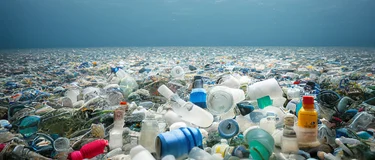
You may not remember that plastic water bottle you threw away 10 years ago, but it's probably still out there somewhere. Humans have discarded so much plastic that by 2050, there will likely be more plastic in the ocean than fish. Decades of plastic waste has broken down into microplastics, polluting nearly every corner of our planet from Mount Everest to the Mariana Trench.
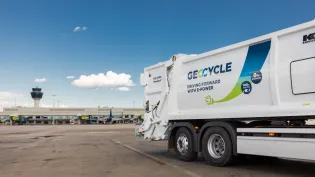
Geocycle's solution of utilizing cement kiln offers a clever solution to safely dispose of this non-recyclable waste. We spoke with Dr. Kåre Helge Karstensen, Chief Scientist at the Foundation for Industrial and Scientific Research (SINTEF), to dive further into the topic of microplastics and the potential for the cement industry. SINTEF is one of Europe's largest independent research organizations focused on natural sciences, technology, health and social sciences.
What are microplastics? How are they currently dealt with?
Since the 1950s, billions of tons of plastic have been produced, with over 5 billion tons entering the environment. Hundreds of millions of tons more are produced yearly, 40% of which is single-use. Plastic takes hundreds or thousands of years to completely degrade, breaking down into nearly invisible microplastics.
Microplastics cannot be recycled and as the supply continues, they end up in landfills and the ocean, posing a severe threat to wildlife. They also present a major human health risk by entering the food chain and subsequently affecting all human organs, leading to various health issues.
Recycling is the ideal solution, but only two of the seven main plastic types are readily recyclable. Only 10% of plastic waste has ever been recycled, another 10% incinerated and the remaining 80% has ended up in the environment.
Municipal solid waste in Europe is about 50% plastic and is often burned in waste-to-energy incinerators. This process causes emissions and about 30% of the input remains as residues, such as fly ash that requires landfill disposal.
How can Geocycle’s cement kiln solution help tackle the microplastic crisis?

Cement kilns offer an appealing alternative. Since plastic is made from fossil fuels and has a similar calorific value, we can input non-recyclable plastic waste into kilns to replace coal. The kiln operates in a closed loop, so all of the material ends up in the final product with no residue produced and zero harmful emissions. They are also much more energy efficient, reaching close to 100% efficiency compared to just 25% for an incinerator.
This process, known as integrated waste management or co-processing, reduces the need for new raw materials to produce cement with comparable or even lower emissions than traditional practice. And unlike costly incinerators, cement kilns are present in nearly every country. Geocycle’s solution, therefore, makes both environmental and economic sense.
Geocycle’s solutions for sustainable plastic waste management
Many developing countries lack the infrastructure to properly handle plastic and municipal solid waste. At Geocycle, our teams around the world work to provide sustainable waste management solutions that create industrial symbiosis and ensure regulatory compliance.
We promote Extended Producer Responsibility (EPR) – a policy approach making producers responsible for managing products they manufacture throughout their lifecycle, through to recycling and end-of-life.
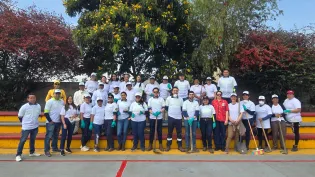
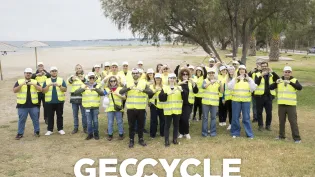
Our teams also collaborate with NGOs to engage with local communities. In Mexico City, we teamed up with ECOCE to manage flexible plastic packaging that can’t currently be recycled in Mexico. In the Philippines, we worked with local teams to remove several tons of plastic waste from Manila Bay, raising awareness and advocating for plastic waste management and ocean waste prevention.
Thanks to our business model, we can offer scientifically-proven, economically feasible solutions at scale. Using cement kilns, we transform municipal solid waste into cement with zero residue and at a high thermal recovery rate. Our approach helps reduce plastic pollution while decreasing the cement industry's reliance on traditional fossil fuels.
Our Stories